|
Sometimes the simplest materials can make the most beautiful things. For example, you can take discarded magazines and turn them into colorful paper beads. This craft of making paper beads is old, possibly dating back to Victorian England when women used scraps of wallpaper. Today, artisans continue the tradition with modern twists creating beautiful jewelry. You can make your own paper bead earrings with rhinestones following our simple directions. For This project I used: Scrap paper White glue Modge Podge 12ss rhinestones Small beads head pins 4 mm Jump ring Earring wire Wooden skewer/knitting needle Jewelry pliers: round and flat nose 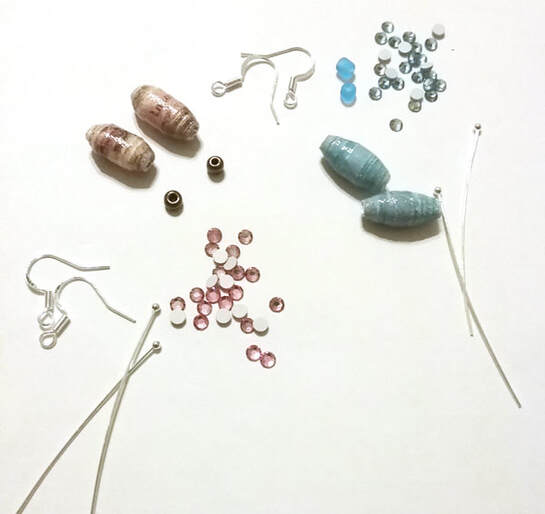 How to Make Paper Beads There are a few different bead shapes you can make which depend on the shape of the paper you cut. A rectangle piece of paper will make a tubular bead while a triangle will make a cone bead. Variations in these shapes will lead to interesting variation differences shape. I used a long triangle shape with a base of ¾ of an inch and sides 8 inches long. Cut out the desired shape from your paper. Place the printed side (the side you want facing outward) face down. Starting about ¼ of an inch from the base, spread your glue thinly starting at the wider end. Set your skewer/knitting needle on the unglued base. Begin to roll your skewer rolling the paper with it to form the bead. When you reach the end, slide the bead off and allow to dry. Next, you’ll need to seal your bead to protect it from the elements. I sealed my beads with several coats of Modge Podge, letting each coat dry thoroughly. 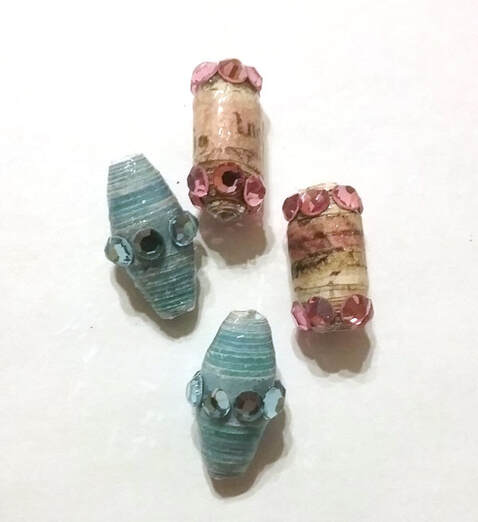 How to Make the Paper Bead Earrings Once the last coat of Modge Podge is thoroughly dry, your ready to glue rhinestones onto your paper bead. I do like to use E6000 on my jewelry projects because of the strength of the bond. Typically, I squeeze a small amount on a paper plate and apply with a toothpick. Always use in a well ventilated area and follow the manufacturer’s instructions. 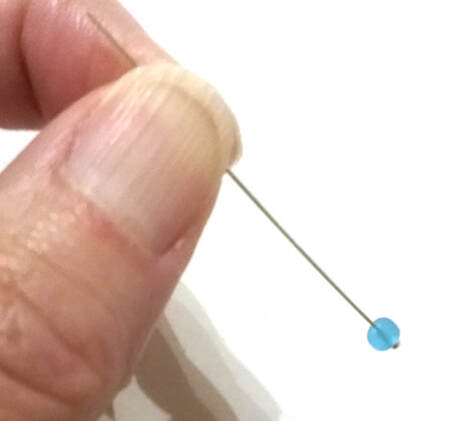 To begin, slide a small bead onto your head pin and then slide a on one of your a paper beads. The next step is to make a loop at the top of the head pin. This can be a little challenging and takes a little practice. You’ll need your round nose and flat nose pliers. Place the round nose just above the top of the paper bead. Then bend the head pin around the nose of the pliers. Continue bending until you have a circle. Remove the round nose pliers. Finally, holding the circle with the flat nose pliers, bend the remaining wire tightly under the loop. 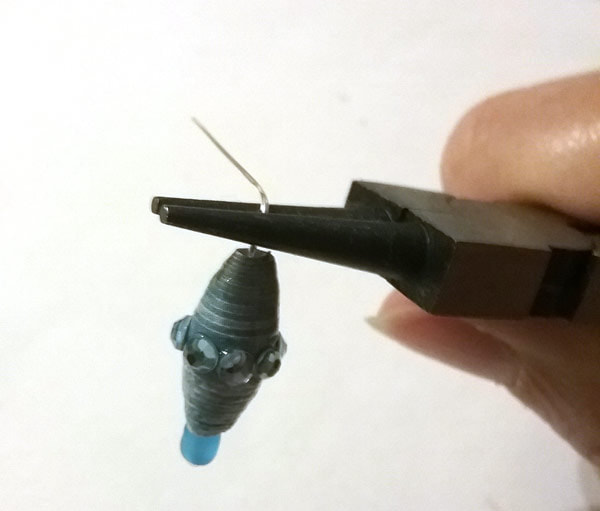 Repeat this process for the other beads. Open a 4mm jumg ring, inserting it in the loop you just made and an earring wire. Close the jump ring. Do this for all the beads. 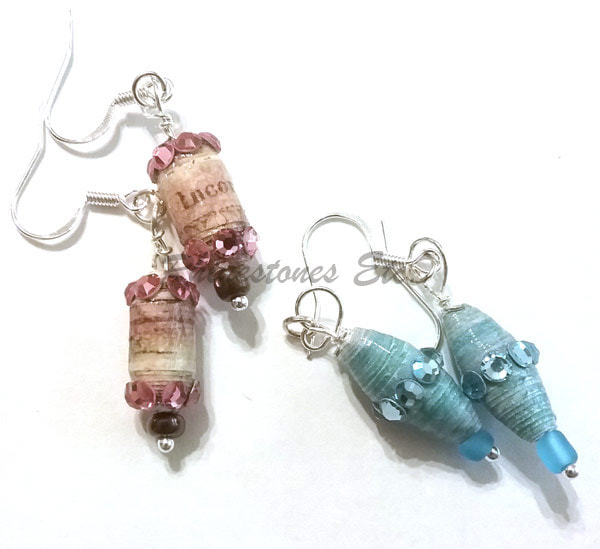 Unique and sparkly, our paper bead earrings with rhinestones are also super easy to make. Plus, the earrings look expensive and artisan made. Make yourself several in different colors to match outfits. And if you need some rhinestones, check out the inventory at Rhinestones Etc. Selling rhinestones online for 10 years, we have fast processing times and excellent customer service.
2 Comments
From earliest times, sparkling gems have captivated our attention. Generally, it was only the nobility or very rich who could afford to have jewelry made from precious stones. So, jewelers sought out alternate cheaper sources to make sparkling jewelry at a lower cost. The discovery of natural rhinestones along the Rhine River provided a supply for a time. When this natural source became depleted, jewelers looked for a way to make them. In the early 1700’s a breakthrough came. A French jeweler by the name of Georg Friedrich Strass developed imitation gems later called rhinestones. He discovered that coating a piece of glass with metal powder created a shimmer in glass, similar to a gemstone. The novelty caught on although the imitations were still very expensive. Cutting each rhinestone by hand was labor intensive. Nonetheless, crafting rhinestones blossomed in Bohemia, now the Czech Republic. Individual skilled artisans honed their craft producing their version of rhinestones. One of these skilled craftsmen, Daniel Swarovski, patented an electric cutting machine. This new machine cut crystal more precisely and quickly than by hand. In 1895, he moved to Austria and opened his own manufacturing plant. Meanwhile, those individual companies in Bohemia eventually merged in 1948 to form the Preciosa brand. Today, there are many other manufacturers of rhinestones in a wide variety of shapes and colors. The Asian markets in particular, produce a large number of quality crystal rhinestones. While there are different brands of rhinestones, they all share some of the same characteristics.  Types of Rhinestones Typically, there are 3 main rhinestone types: crystal, glass or acrylic. Rhinestones manufactured from crystal are the most expensive rhinestones. Primarily, crystal is glass mixed with lead or other components which make it clearer and prismatic. The prismatic effect is the ability to take light and break it up similar to a prism. Because of the safety concerns with lead, Swarovski and Preciosa no longer use lead in making their crystal. Both companies have achieved this without losing any sparkle from the rhinestone. This means that both types of rhinestones are CPSIA compliant and are safe for use with children. Similar to crystal, glass rhinestones have a coating to produce a shimmer in the rhinestone as well as facets. However, glass rhinestones do not have the prismatic quality of crystal. Nevertheless, glass rhinestones typically are precision cut by machine. Occasionally, you may see rhinestones listed as DMC or MC. These rhinestones are Asian machine cut rhinestones and they may be either crystal or glass. Finally, there are the acrylic rhinestones, the most inexpensive of all. Formed from molds, acrylic rhinestones do have facets which produce some sparkle. Acrylic rhinestones are a great choice for children’s crafts because they’re lead-free and very inexpensive. Confused about some of the rhinestone choices? Rhinestones Etc. has a large selection of rhinestones at discount prices. We’ll be glad to answer any questions you have regarding rhinestones. You can contact us here. 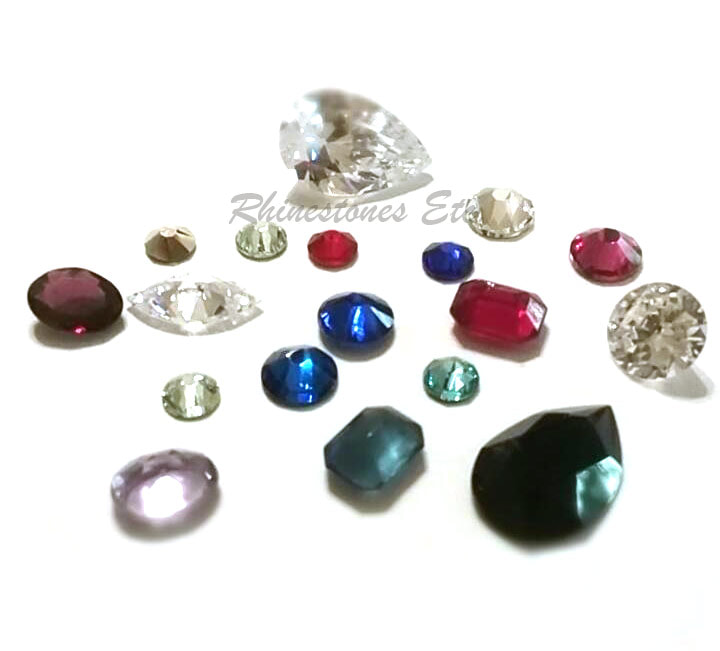 Rhinestones Quality is based on Color, Cut, Contour, and Clarity When shopping for expensive gems, jewelers recommend examining a specimen for the 4 C’s: color, cut, clarity, and carat. The grade of each of these components helps determine the gem’s value. Although slightly different, rhinestones also have 4 C’s: color, cut, clarity, contour. Chiefly, there are many different rhinestone colors and your color choice affects the price. Crystal or clear rhinestones are the least expensive. Aurum, a gold rhinestone with a thin coating of 14k gold is the most expensive. However, within each color, the hue, tone, and saturation must be the same for consistency. The trueness and intensity of color must be the replicated throughout. Variations in color are the mark of cheaper rhinestones. Next, cut refers to the facets. Facets are the small plane surfaces cut into the rhinestone that reflect the light. The more facets, the more light reflects and hence the rhinestone has more sparkle. Swarovski makes a rhinestone with the most facets, 16 arranged in a star shape pattern called the Xirius. Preciosa manufactures a rhinestone named Maxima with 15 facets. Other rhinestone manufacturers cut between 8 and 12 facets into their rhinestones. Generally, the more facets, the more expensive the rhinestone. Chiefly, clarity is the lucidity or clearness of the rhinestone. The rhinestone should be free from spots, streaks or bubbles. Any type of cloudiness in the rhinestone is the mark of an inexpensive brand. Finally, contour refers to the consistency of the shape of the rhinestone. Typically, the shape of the rhinestone also determines its price. Round rhinestones are generally the least expensive, while fancy shapes such as baguette, navette, and others more costly. Size also affects the pricing, with rhinestones increasing in price with the size. 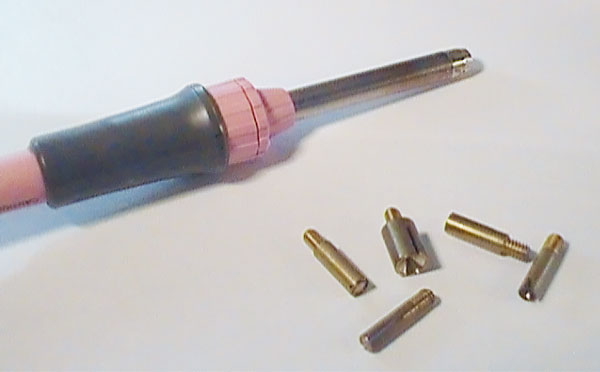 Hot Fix Rhinestones One type of rhinestone is the hot fix which has glue attached to the flat side. To adhere, you can use a hot fix tool, iron or heat press. Swarovski, a manufacturer of rhinestones, recommends a temperature range of 250 degrees F – 340 degrees F to activate the glue. If you choose to use an iron, you will need one without steam vents. Irons with vents don’t provide a flat surface and consequently inadequate pressure when applying rhinestones. Also, water and steam can negatively affect the hot fix application. Never slide the iron as this may move the rhinestones. Always press down the iron and lift straight up before applying heat elsewhere. Another way to attach hot fix rhinestones is with a hot fix tool. These tools come with different screw-on tips to accommodate different size rhinestones. To attach, you lay the rhinestones on a flat surface, facet side up. Heat up your tool, then place the tip over the top of the rhinestone. The rhinestone will stick in the cup of the tip. After about 15 seconds, the glue will begin to bubble. Tap the rhinestone onto the fabric and the rhinestone will stick. Don’t press too hard as this can cause the glue to spread and the rhinestone to stick in the cup. Allow the rhinestones to cool, which takes only a few minutes. Unfortunately, there are some fabrics that are just not suitable for hot fix application. These include very tightly woven textiles, smooth leather or smooth imitation leather, and thin fabrics like organza. To check to see if your fabric is suitable for hot fix rhinestones, apply several drops of water. If the fabric absorbs the water droplet quickly, you can use hot fix rhinestones on it. Alternately, if the water pearls, the fabric is not suitable for hot fix rhinestones. 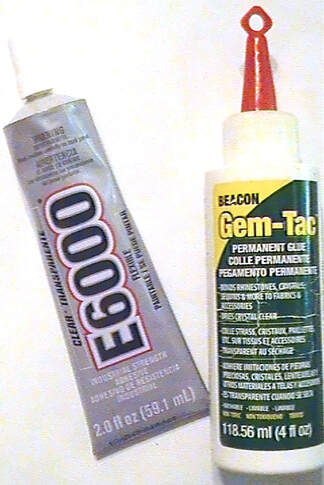 Flat Back Rhinestones Another type of rhinestone is the non-hot fix or commonly referred to flat back. One way to attach flat backs or non-hot fix rhinestones is by gluing. There are a variety of rhinestone glues on the market. Some provide a better bond on certain surfaces than others. Be sure to check the manufacturer’s instructions for recommendations. Additionally, some glue manufacturers do not recommend using their product on cheaper rhinestones like acrylics. For example, E6000 is an industrial strength glue that produces a strong bond to smooth surfaces. It works great on metal and glass. Alternately, Gem-Tac is a great fabric glue that’s easy to apply, dries clear and is washable. There are some other adhesives like Swarovski’s 2-part epoxy, Beacon’s Fabri-Tac and such. Just make sure whichever you use, its suitable for rhinestones, dries clear and if gluing to clothes, washable. One of the key components in gluing rhinestones to clothing is the method. Many people use too little glue causing the rhinestone to peel off. It’s very important that some of the glue seeps out the sides of the rhinestone. This forms a seal to keep the rhinestone in place. 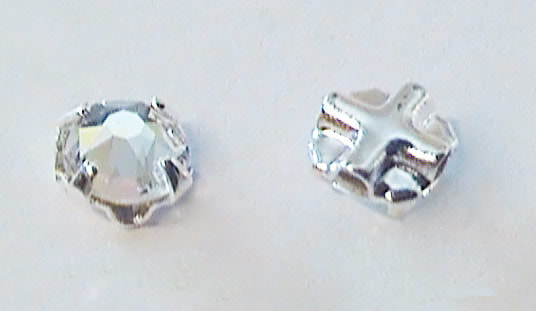 Other Methods of Attaching Rhinestones Generally, there are some other ways of attaching rhinestones to fabrics: metal settings and sew-on rhinestones. To begin with, there are 2 types of metal settings, Tiffany and rim. Their basic difference is one secures form the inside of the garment and the other from the outside. In particular, a rim setting surrounds the rhinestone on the right side of the fabric. The prongs pierce and bend on the inside of the garment to secure the rhinestone. Whereas Tiffany settings have metal prongs pierce through to the outside of the fabric to grab the rhinestone. These prongs bend around the rhinestone to hold it into place. Uniquely, sew-on rhinestones have pre-drilled holes in the crystal allowing a needle to pass through. Sew-0n rhinestones are available in a large variety of shapes. Similarly, a Rose Montee is a rhinestone set in a metal setting that has cross channels on the bottom. A needle easily passes through the cross channels thus, making them easy to sew on. Moreover, thin wire can pass through these channels as well, making Rose Montees ideal for jewelry making. 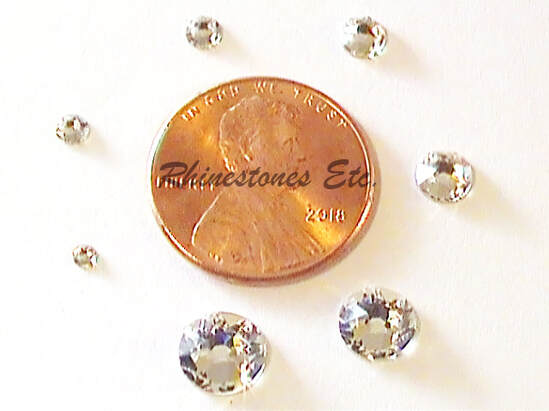 Sizing of Rhinestones Admittedly, the sizing of rhinestones is unique and different. The system goes back to when rhinestones were a natural resource of sparkling quartz. Finders of these sparkling quartz stones grouped them according to their size by dropping them into different size holes. This gave the sparkling quartz a number “stone size“ or “ss”. Larger size sparkling quartz had larger numbers and smaller sized quartz smaller. Even though this natural resource no longer exists, rhinestone manufacturers still use this system of measurement. Usually, retailers of rhinestones will give the equivalent millimeter size adjacent to the “ss” size so you can compare. Sometimes, too, retailers will have a sizing chart with a picture of the size of that particular rhinestone. You can view our millimeter/ss size chart here. When trying to figure out how many rhinestones you need for a project will depend on the size you choose. This is especially true when you’re covering an item with rhinestones. For example, size 20ss is 4.7mm and you need about 29 rhinestones to cover 1 square inch. Compare this to size 12ss which is 3.1mm requiring 67 rhinestones to cover 1 square inch. Of course, the type of project you’re working on may influence your choice of size as well. For instance, you probably want smaller stones for rhinestones your nails yet larger rhinestones for embellishing your wedding dress. Still confused about the right choice of rhinestone for your project? Rhinestones Etc. would love to help! We’ve been selling rhinestones for over 10 years. Drop us a line here, and we’ll get back to you quickly with an answer.
Moreover, we have a huge selection of Preciosa Maxima Rhinestones. Browse our online store to find your color. While your wedding day is a big event to plan, you also have some smaller events to organize. There’s the bridesmaid luncheon, bachelorette party, and rehearsal dinner. And for each of these events, you need something to wear. What better way to announce to the world the upcoming event than by wearing a blinged-out “bride” shirt. Perhaps you’ve seen these shirts in major retailers. Generally, they are expensive and made with cheaper rhinestones without much sparkle. However, you can make your own using our rhinestone template and your choice of rhinestones. 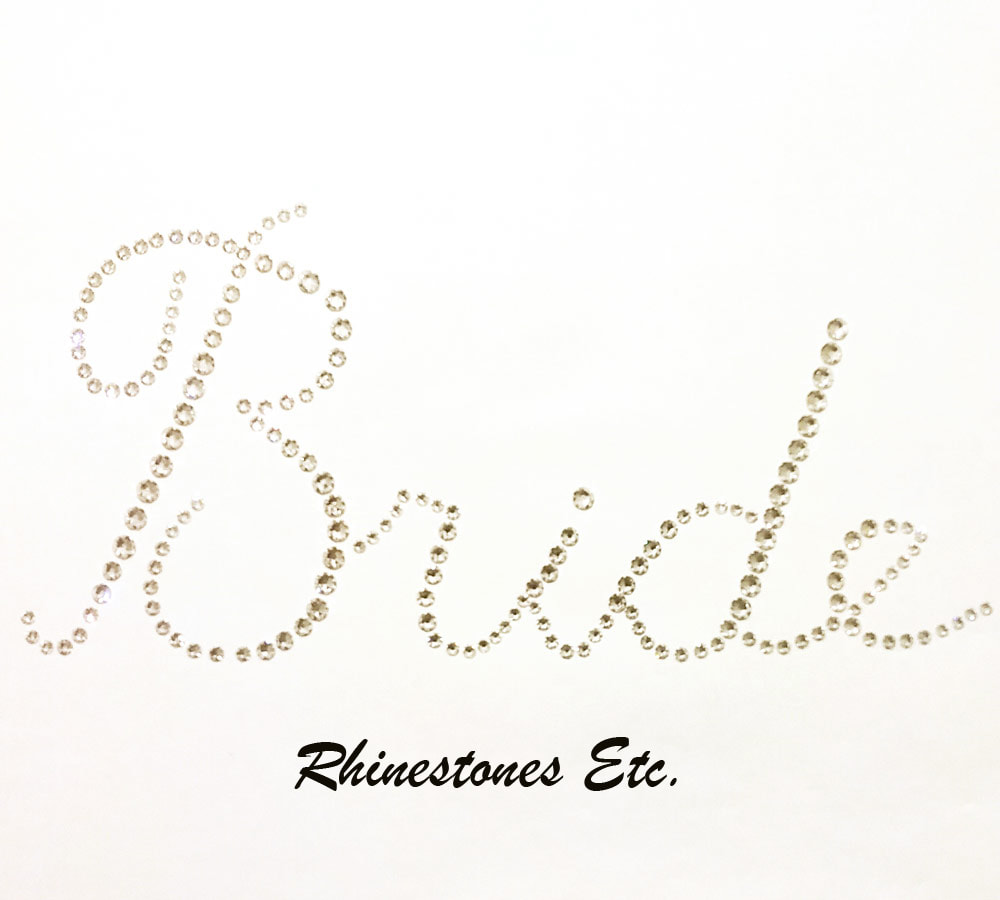 How to Use Our Rhinestone Template Simply go to our website and download the template. Our design has all the size rhinestones listed so you know exactly what you need and how many. Moreover, you can experiment by using all the same size or different sizes. Generally, these bride shirts use crystal rhinestones, but you can choose any color you want. Next, decide on whether you want to use hot fix or flat back (glue-on) rhinestones. Hot fix rhinestones have glue already on them while flat backs require glue. Both of these types of rhinestones work great for this type of project. Even if you’ve never undertaken this type of project before, you can do this easily with our instructions. Finally, always make sure to pre-wash your garment before adding rhinestones. Using Hot Fix Rhinestones To start with, you’ll need some transfer paper if you’re going to use hot fix rhinestones. Peel the opaque piece off of the transfer paper and put it aside. Lay the clear paper, sticky side up on top of the template. Now lay the rhinestones, facet side down, on the sticky paper, placing the rhinestones as indicated. Once you have all the rhinestones placed, you can iron it on to your t-shirt. Heat your iron to the hottest setting without steam. Lay your shirt flat on the ironing boards. Position the rhinestone transfer on the shirt, the flat side of the rhinestone touching the shirt. With the iron, press down on rhinestone transfer, holding for 12-17 seconds. Lift the iron up and if necessary, press down on another part of the transfer. DO NOT slide the iron as this may dislodge and move the rhinestones. Once you’ve done this for the entire transfer, allow to cool completely. Then peel off the clear sticky part and you have your finished shirt. 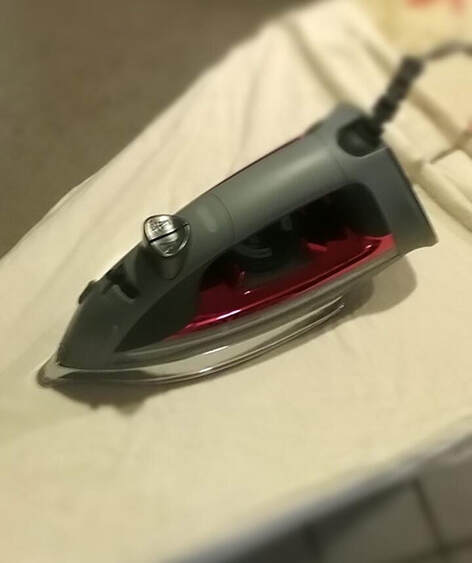 Flat Back Rhinestones On the other hand, flat back rhinestones require an adhesive. You can find several at your local craft store. My favorite fabric glue for rhinestones is Gem-Tac. It dries clear, is washable and is easy to apply. The technique for flat back rhinestones is different. First, lay the shirt as flat as possible on your work surface. Using the template as a guide, lay all the rhinestones on the shirt. Then, one at a time, pick up a rhinestone placing a drop of glue in its place. Next, gently press the rhinestone into the glue drop, allowing some of the glue to seep out the sides. This “extra” glue forms a seal which helps protect the rhinestones from peeling off. Continue removing one rhinestone at a time and gluing into place until your design is complete. Allow to dry flat for 24 hours. 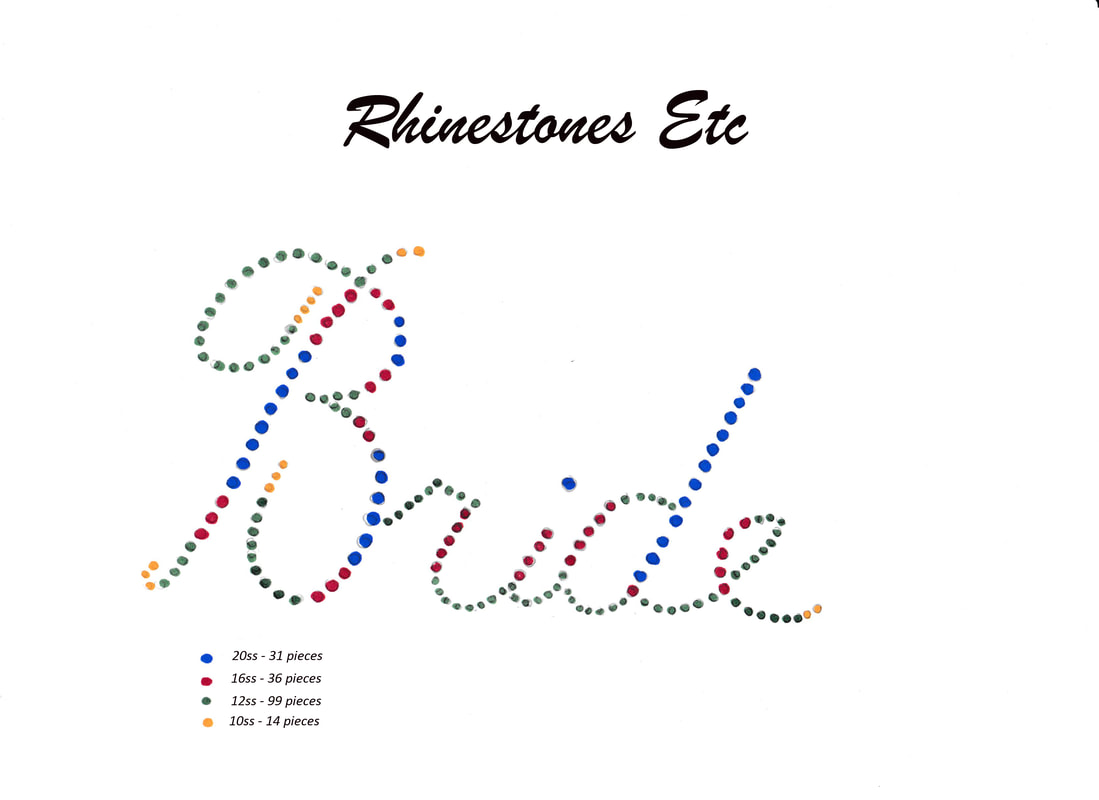 You’ve just saved yourself some money by making your own blinged-out bride shirt. Best of all, our rhinestone template is free! And if you need rhinestones, check out Rhinestones Etc. competitive pricing on rhinestones! We have excellent customer service and want your complete satisfaction with each purchase. Browse our online store to find your color! |
KarenI have been adding bling for over 20 years. Through my projects, I hope you find inspiration. Categories
All
Archives
July 2024
|

 RSS Feed
Home About Policies Return Shipping
Contact Us Size Chart Privacy Products Reviews
Copyright 2024 Rhinestones Etc. All rights reserved.
Contact Us Size Chart Privacy Products Reviews
Copyright 2024 Rhinestones Etc. All rights reserved.